Lath
The lath phase creates the foundation for the entire stucco system. Before installation begins, surrounding windows, doors, roofs, walkways, and existing finishes are covered as necessary to help protect them during construction.
Weather-resistant building paper is installed in a shingle-lap pattern to help direct incidental moisture toward the exterior. Metal lath is then fastened to the approved wall surface, followed by the required weep screeds, corner reinforcement, casing beads, expansion joints, control joints, and other applicable stucco accessories.
Openings, pipes, electrical boxes, vents, and other wall penetrations within our scope are caulked or integrated with the weather-resistant barrier as required. The completed lath installation is prepared for inspection before plaster application begins.

Scratch Coat
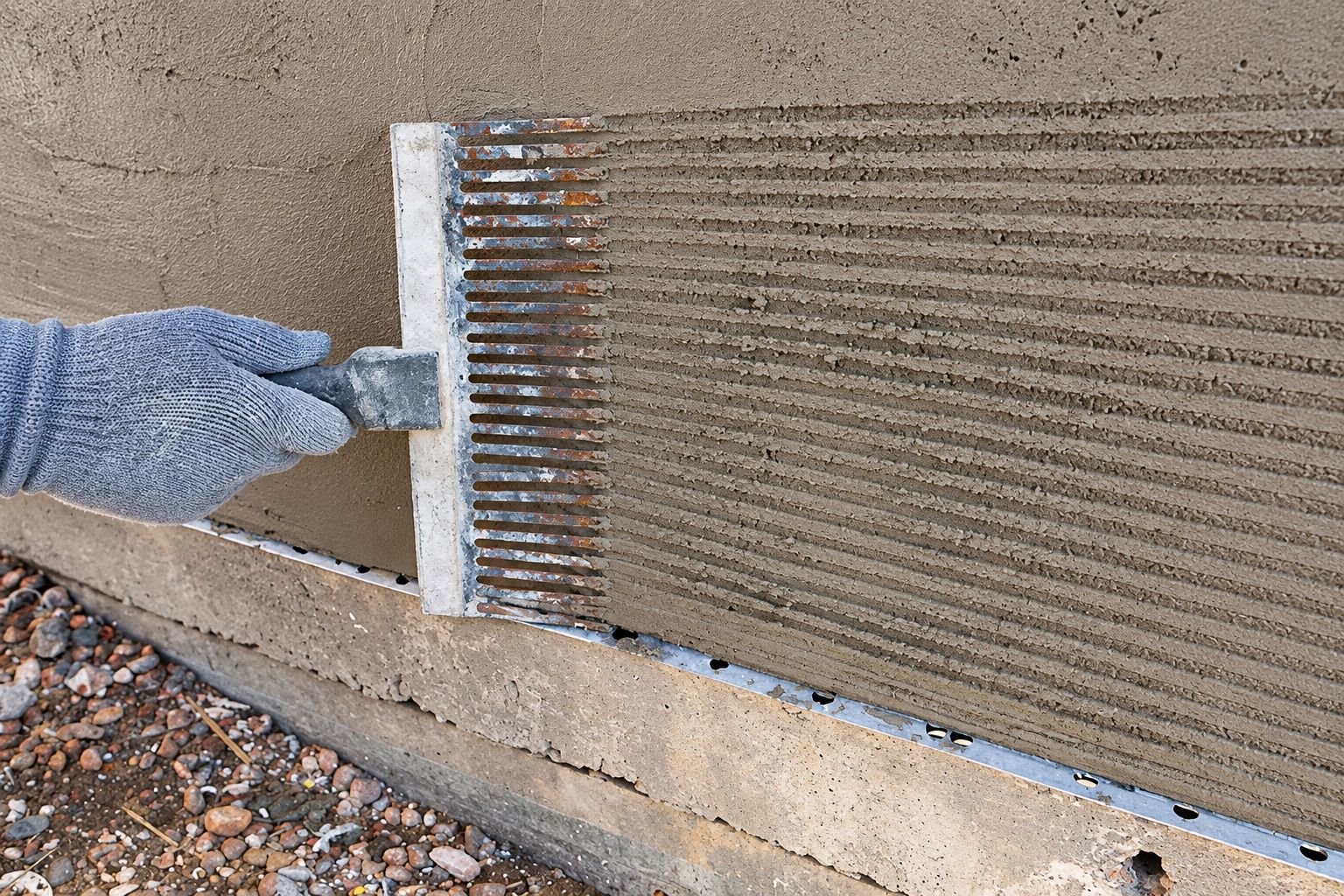
The scratch coat is the first cement-plaster layer applied over the metal lath. The plaster is worked through and around the lath so it can mechanically bond to the reinforced wall system.
While the material is still workable, horizontal grooves are scratched into the surface. These grooves create texture and provide a stronger mechanical bond for the brown coat that follows.
After application, the scratch coat must be allowed to cure properly. Weather conditions, wall exposure, jobsite access, inspections, and required curing time may affect when the next phase can begin.
Brown Coat
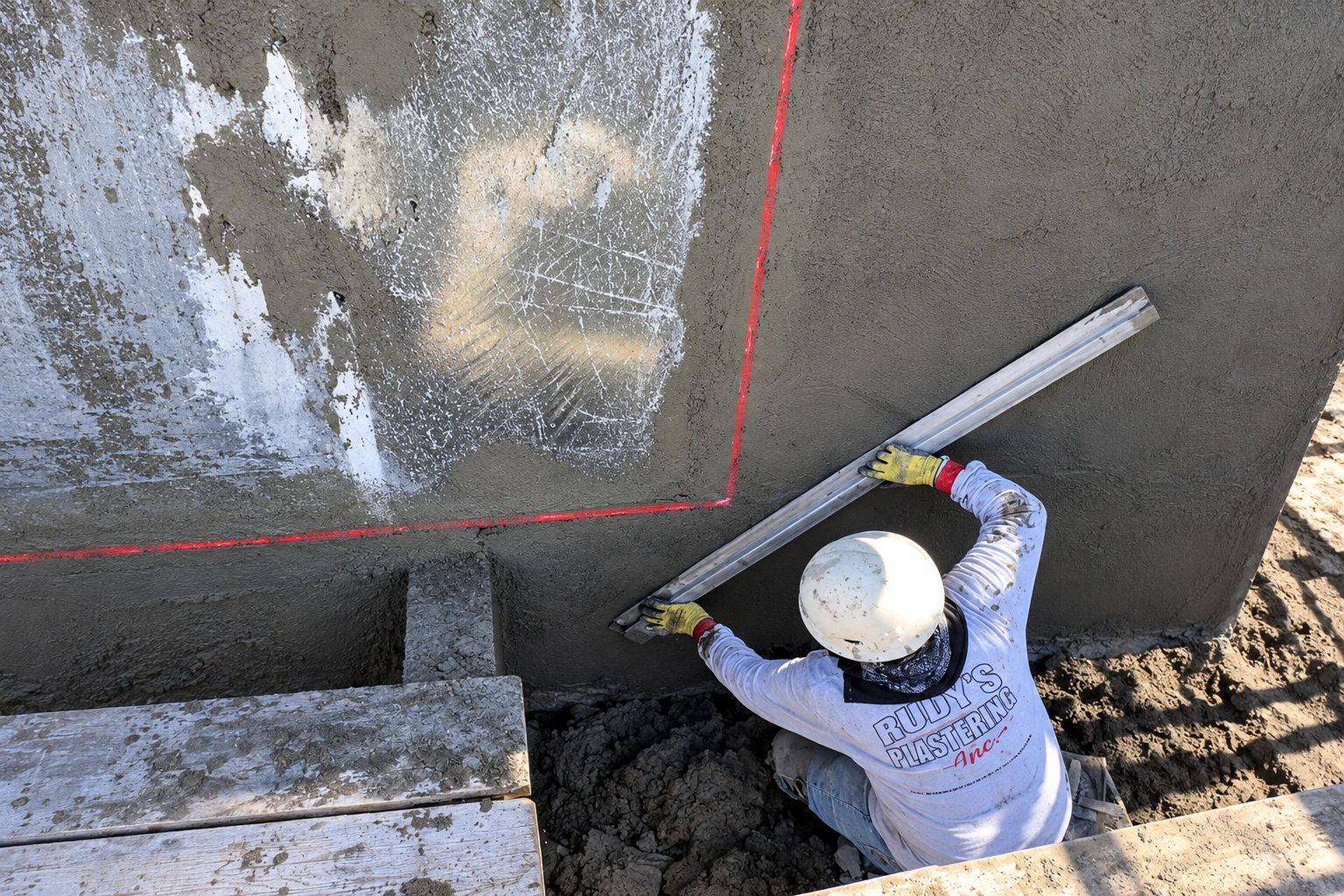
The brown coat is the second cement-plaster layer and is used to build the stucco system to its required thickness. This phase helps straighten, level, and shape the walls while creating a consistent surface for the reinforcement and finish materials.
The plaster is applied over the cured scratch coat and worked to improve the wall’s overall plane. Minor irregularities in framing or backing may affect the final flatness of the wall and should be addressed before or during the appropriate construction phase.
The brown coat must cure before the next application. Small surface cracks may develop during the curing process and do not necessarily indicate a structural problem. The polymer base coat and fiberglass mesh installed during the following phase help reduce the visibility and development of surface cracking.
Base Coat With Fiberglass Mesh
A polymer-modified base coat is applied over the properly cured brown coat to create a uniform surface and improve adhesion for the finish coat. Fiberglass mesh is embedded into the wet base coat to reinforce the surface and help minimize hairline cracking.
Particular attention is given to openings, corners, transitions, and other areas where movement or stress may be concentrated. The mesh is overlapped as required to create a continuous reinforced layer.
Fiberglass mesh improves crack resistance, but it cannot eliminate cracking caused by structural movement, framing movement, improper backing, building settlement, water intrusion, or conditions outside the stucco contractor’s control.
Base Coat With Fiberglass Mesh
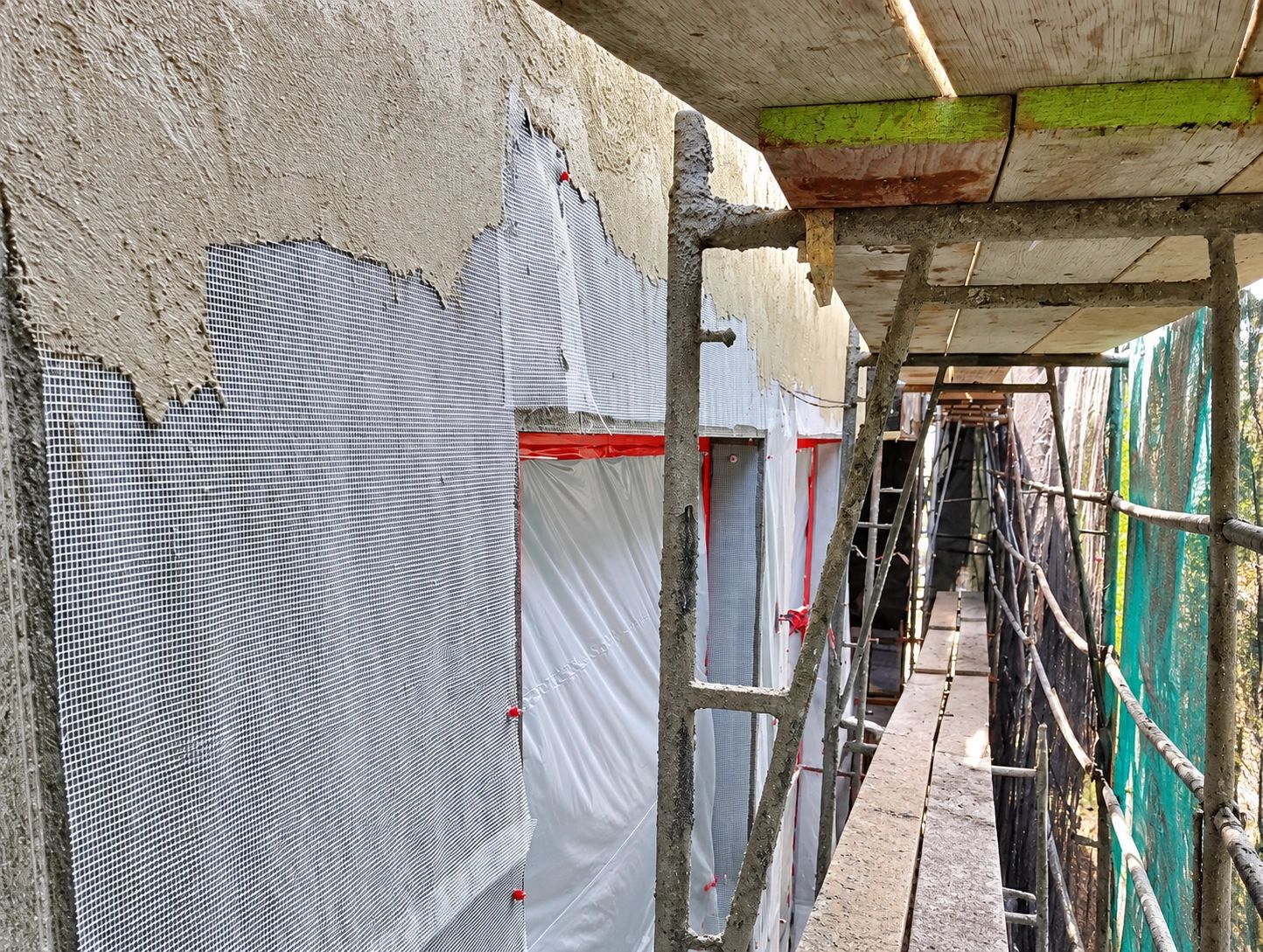
A polymer-modified base coat is applied over the properly cured brown coat to create a uniform surface and improve adhesion for the finish coat. Fiberglass mesh is embedded into the wet base coat to reinforce the surface and help minimize hairline cracking.
Particular attention is given to openings, corners, transitions, and other areas where movement or stress may be concentrated. The mesh is overlapped as required to create a continuous reinforced layer.
Fiberglass mesh improves crack resistance, but it cannot eliminate cracking caused by structural movement, framing movement, improper backing, building settlement, water intrusion, or conditions outside the stucco contractor’s control.
Color Coat Smooth Finish
A polymer-modified base coat is applied over the properly cured brown coat to create a uniform surface and improve adhesion for the finish coat. Fiberglass mesh is embedded into the wet base coat to reinforce the surface and help minimize hairline cracking.
Particular attention is given to openings, corners, transitions, and other areas where movement or stress may be concentrated. The mesh is overlapped as required to create a continuous reinforced layer.
Fiberglass mesh improves crack resistance, but it cannot eliminate cracking caused by structural movement, framing movement, improper backing, building settlement, water intrusion, or conditions outside the stucco contractor’s control.